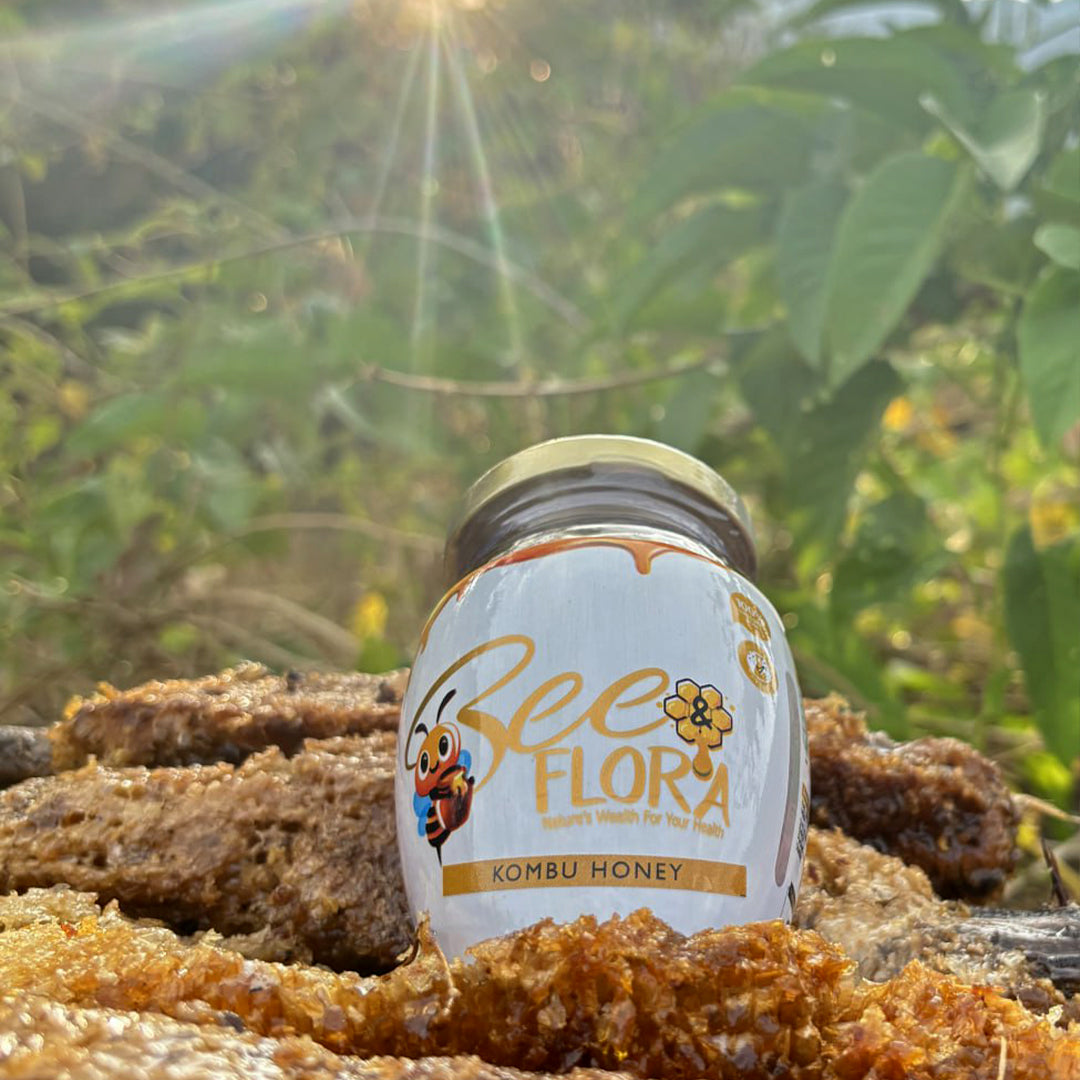
What is Wild Tiny Bee – Kombu Honey?
-
Best suited for children above 1 year of age
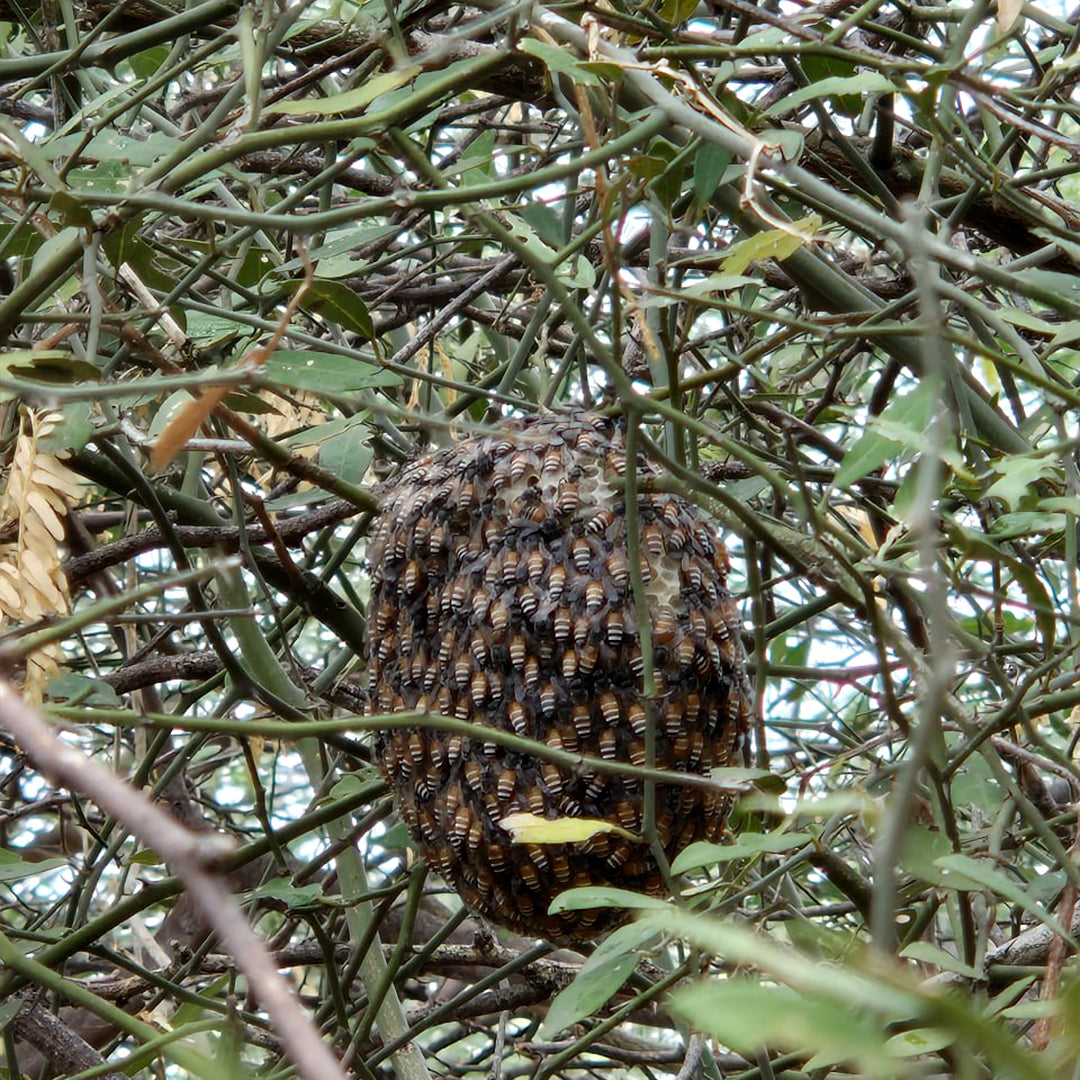
- Collected by Apis florea, the smallest honey bee species with a sting in India
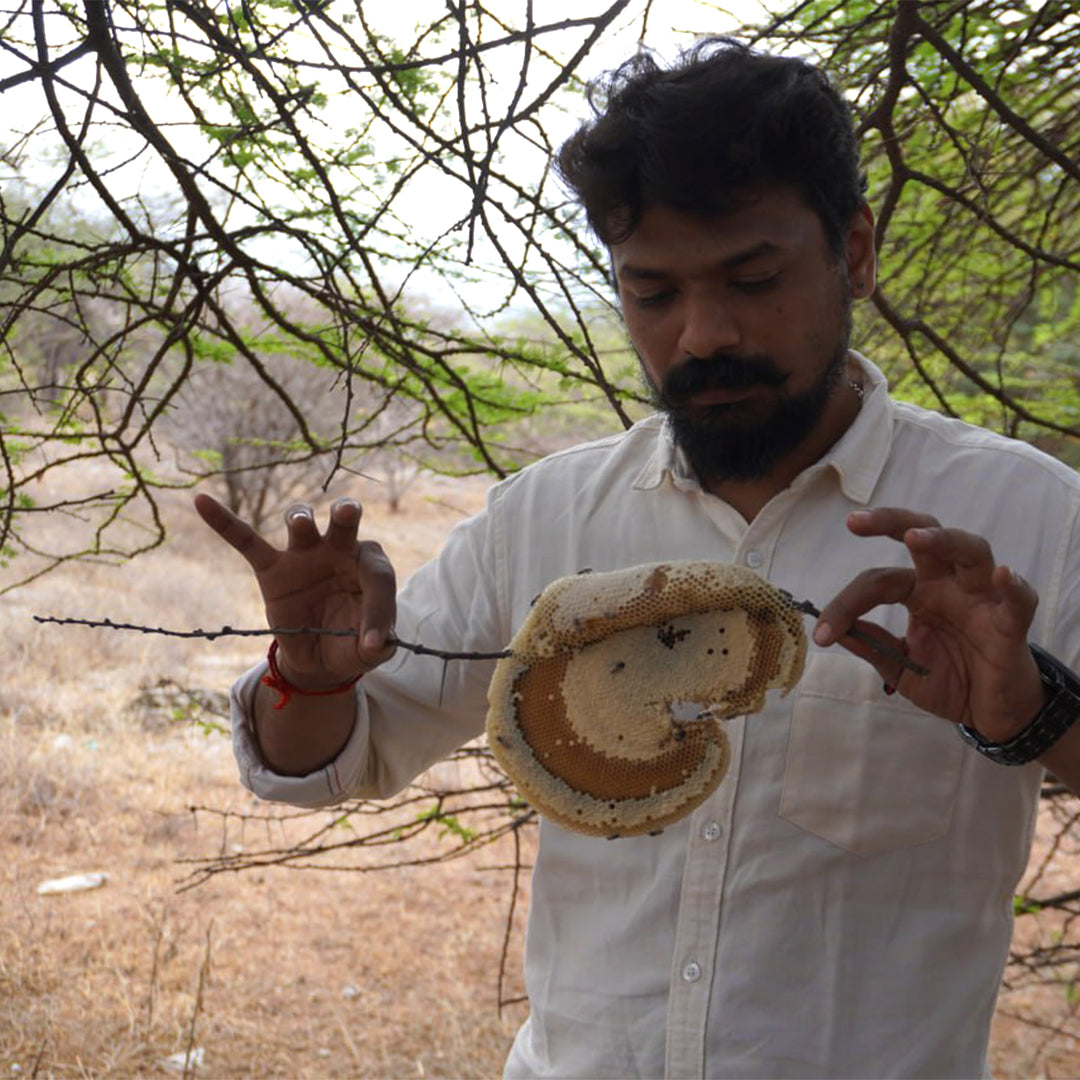
- Bees build small hives on bushes, hedges, and small trees, producing honey in limited quantities
- This honey is traditionally harvested by tribal communities using age-old natural methods
- Naturally mild taste due to gentle enzyme activity and light aroma
- Taste remains soft and gentle across batches
- Bees collect nectar and pollen even from the tiniest flowers, medicinal plants, and wild shrubs as small sting bee
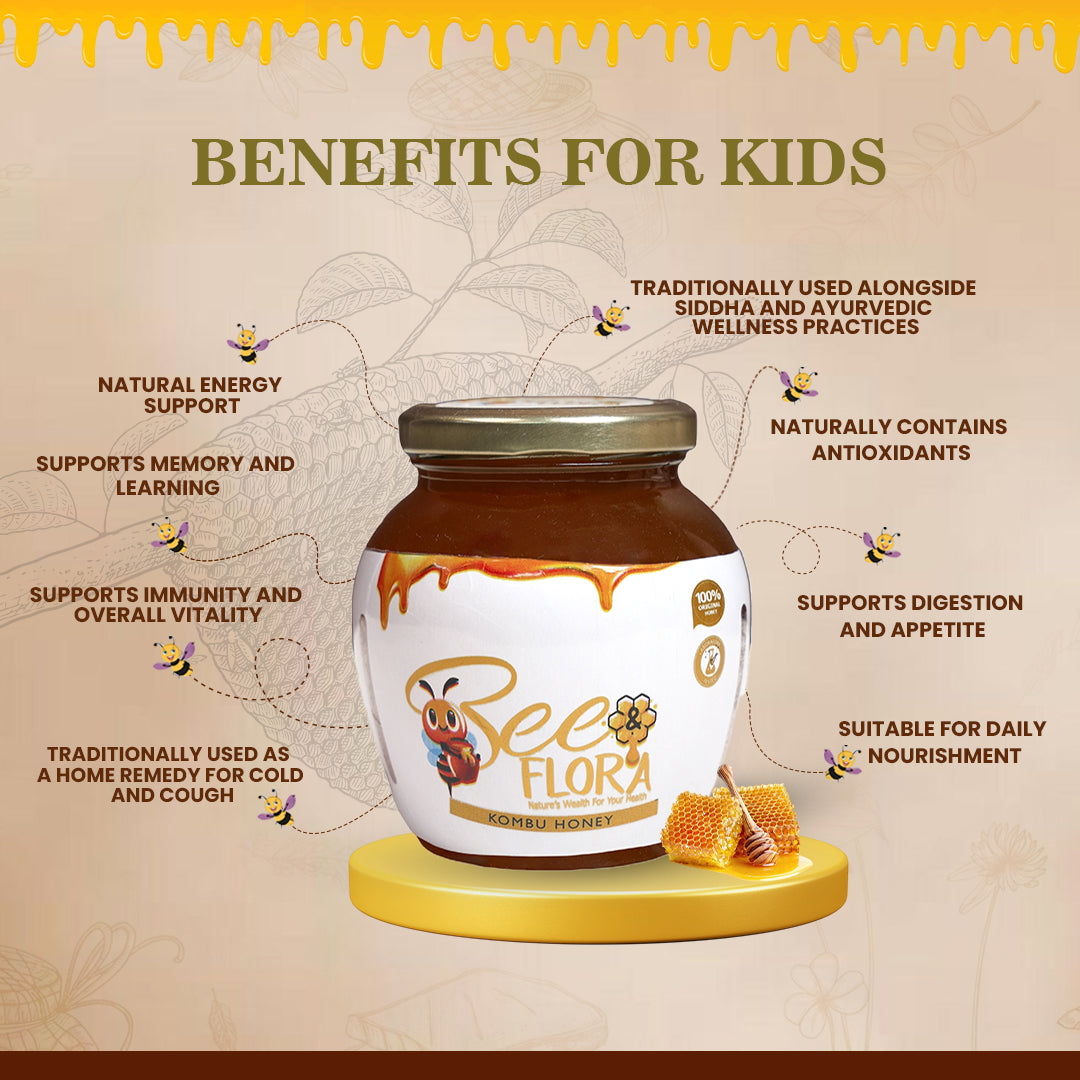
Benefits for Kids:
- Natural energy support
- Supports memory and learning
- Supports immunity and overall vitality
- Naturally contains antioxidants
- Known for antibacterial and anti-inflammatory properties
- Traditionally used as a home remedy for cold and cough
- Supports digestion and appetite
- Suitable for daily nourishment
- Traditionally used alongside Siddha and Ayurvedic wellness practices
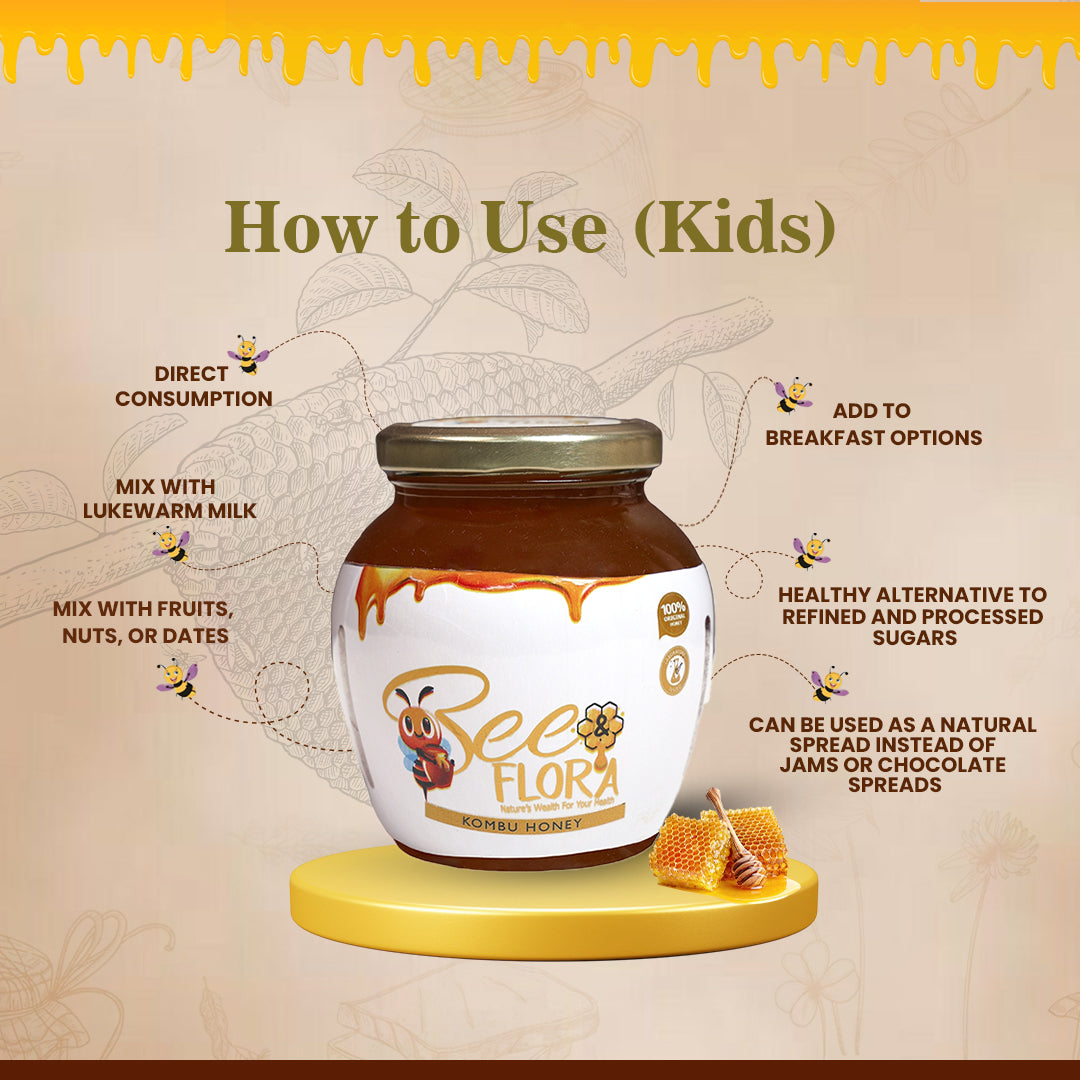
How to Use (Kids):
- Direct consumption
- Mix with lukewarm milk
- Mix with fruits, nuts, or dates
- Add to breakfast options
- Healthy alternative to refined and processed sugars
- Can be used as a natural spread instead of jams or chocolate spreads
Note: Not recommended for children below 1 year of age.
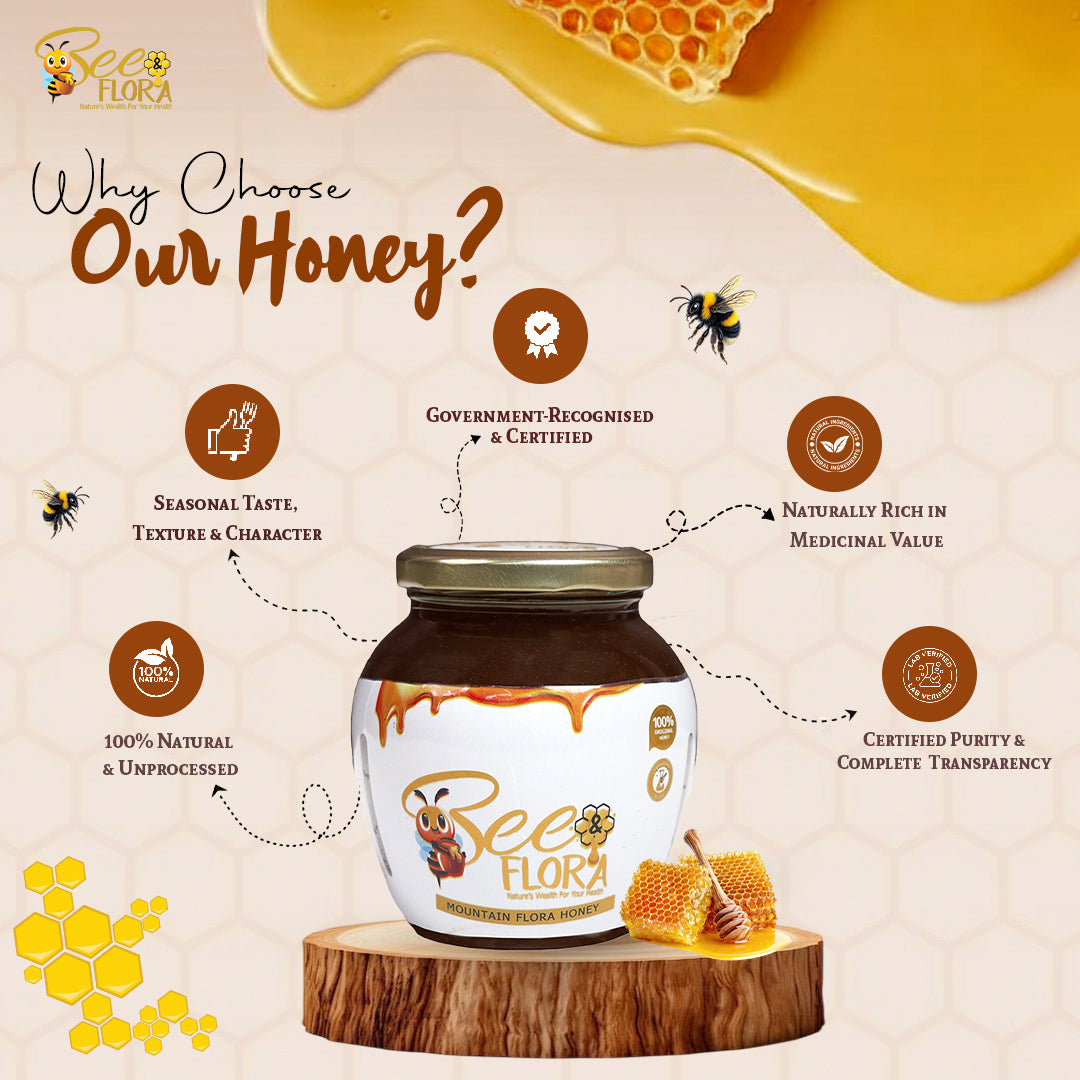
Why Choose Our Honey:
1. Certified Purity & Complete Transparency - Every Batch
We are among the first Indian honey brands to provide a NABL-accredited purity certificate for every batch. Each certificate is made accessible to our customers, ensuring complete transparency and trust in what you consume.
2. Government-Recognised & Certified
Proudly certified by KVIC (Khadi and Village Industries Commission). We are among the first wild honey brands in India to receive this prestigious government recognition, reflecting authenticity and ethical sourcing.
3. 100% Natural & Unprocessed
Our honey is harvested directly from natural hives found in pristine mountain and forest regions. Sourced from diverse native honey bee species, it is raw, unprocessed, and free from artificial additives.
4. Naturally Rich in Medicinal Value
Harvested from natural honeycombs, our honey retains its nectar, natural pollen, and trace bioactive components that contribute to its traditional wellness and nutritional value.
5. Seasonal Taste, Texture & Character
Each harvest reflects the unique floral season and region it comes from. Natural variations in taste, aroma, colour, and texture make every batch unique — a true sign of original honey.
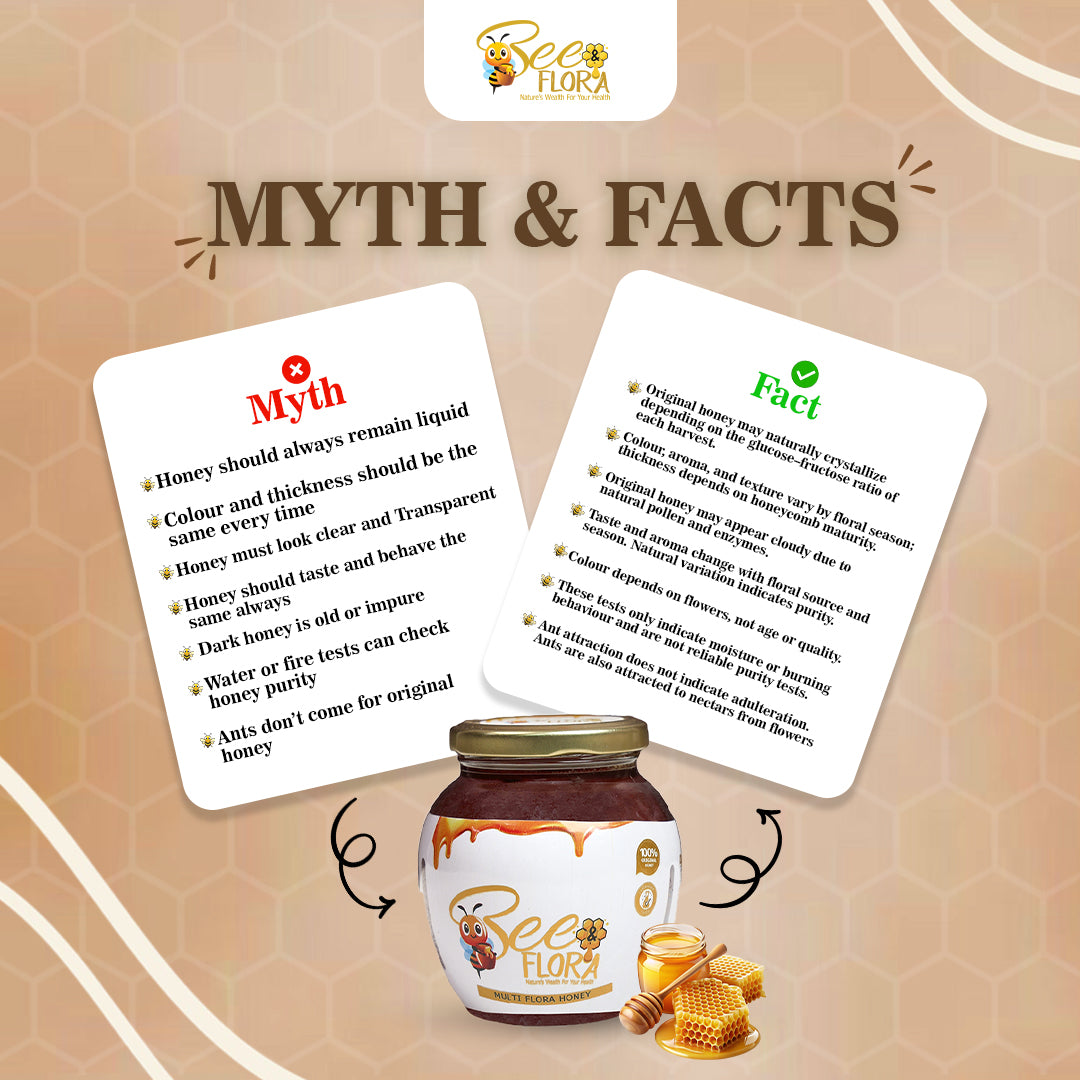
Myths & Facts About Original Honey :
Original honey is a natural, seasonal food created by bees from floral nectar. Because it is not an industrial product, it naturally varies in appearance, taste, and behaviour. Below are some common myths and the facts behind them.
Myth 1: Honey should always remain liquid
Fact: Original honey may crystallize naturally over time. This happens due to the natural glucose–fructose ratio present in each harvest. Floral source, temperature, and storage conditions also influence crystallization.
Myth 2: Colour and thickness should be the same in every harvest
Fact: Honey colour, aroma, and texture vary with season, region, and floral availability. Thickness also depends on the maturity of the honeycomb at the time of harvest and natural moisture levels. Variation between batches is a normal and healthy characteristic of original honey.
Myth 3: Honey must look clear and transparent
Fact: Original honey may appear cloudy or opaque due to naturally occurring pollen, enzymes, and micronutrients.
Myth 4: Honey should taste and behave the same always
Fact: Taste, aroma, and after-feel of honey naturally change with the floral source and season. Original honey is a living natural food, and such variations are strong indicators of purity and authenticity.
Myth 5: Dark honey is old or impure
Fact: Honey colour depends on the type of flowers, forest flora, and minerals present in the nectar..
Myth 6: Water test and fire test can determine honey purity
Fact: Popular home tests like the water test or fire test do not confirm honey purity. These methods only give limited information about moisture content or burning behaviour, which are not reliable indicators of adulteration or originality.
Myth 7: Ants don’t come for original honey
Fact: Ants are naturally attracted to all sweet substances, including pure honey. Honey contains natural sucrose derived from floral nectar, so ant attraction or absence does not indicate purity or adulteration.